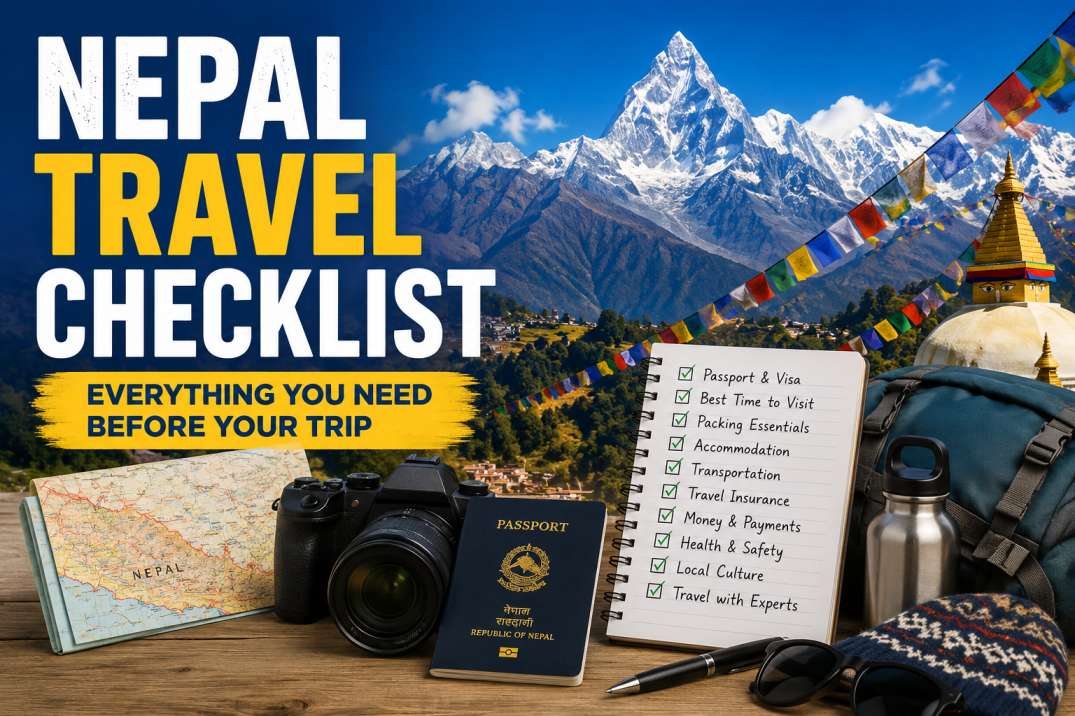
Planning a trip to Nepal? This Nepal Travel Checklist will help you prepare for an unforgettable journey. Whether you’re visiting for trekking, cultural sightseeing, wildlife adventures, or a relaxing holiday, following this Nepal Travel Checklist ensures you have everything you need before you travel.
This Nepal travel checklist covers the essential things you should know before you travel, helping you avoid common mistakes and make the most of your visit.
Nepal Travel Checklist: Passport and Visa Requirements
Before booking your trip, ensure your passport is valid for at least six months from your arrival date. Most international visitors can obtain a tourist visa upon arrival at Tribhuvan International Airport in Kathmandu or apply online in advance. Since visa policies may change, always verify the latest requirements before your departure.
For the latest visa requirements and travel updates, visit the official Department of Immigration Nepal website: https://www.immigration.gov.np/
Choose the Best Time to Visit Nepal
The best time to visit Nepal depends on the experience you’re looking for. Spring, from March to May, is famous for colorful rhododendron forests and excellent trekking conditions. Autumn, from September to November, offers clear mountain views, pleasant weather, and is considered the peak travel season.
Winter is ideal for sightseeing in lower elevations, while the monsoon season transforms the countryside into a lush green landscape, although heavy rainfall can affect travel plans in some regions.
Nepal Travel Checklist: Packing Essentials
Nepal’s climate varies greatly depending on altitude. If you’re exploring Kathmandu, Pokhara, or Chitwan, lightweight clothing and comfortable shoes are usually enough. However, trekking in the Himalayan region requires warmer layers, waterproof clothing, hiking boots, gloves, and a quality backpack.
Don’t forget essentials such as sunscreen, sunglasses, a reusable water bottle, power adapters, personal medications, and a basic first-aid kit.
Book Accommodation and Transportation Early
Popular destinations and trekking routes can become fully booked during peak seasons. Reserving your hotels, domestic flights, and transportation in advance helps you secure better prices and avoid last-minute stress.
Working with a trusted local travel agency can simplify your planning and provide expert recommendations based on your travel interests and schedule.
Carry the Right Payment Methods
Credit and debit cards are accepted at many hotels, restaurants, and businesses in major cities. However, smaller towns and remote trekking areas rely heavily on cash. Carry enough Nepalese Rupees for local transportation, entrance fees, shopping, and meals.
ATMs are widely available in Kathmandu and Pokhara but may not be accessible in remote destinations.
Get Comprehensive Travel Insurance
Travel insurance is highly recommended, especially if you plan to trek or participate in adventure activities. A good insurance policy should cover medical emergencies, trip cancellations, lost baggage, and emergency helicopter evacuation if you’re traveling in high-altitude regions.
Having proper coverage provides peace of mind throughout your journey. If you’re still deciding whether Nepal should be your next destination, explore our guide, Why Nepal Is the Perfect Travel Destination in 2026, to discover the breathtaking landscapes, rich culture, and unforgettable experiences that await every traveler.
Respect Local Culture and Traditions
Nepal is known for its welcoming people and rich cultural heritage. When visiting temples and monasteries, dress modestly and remove your shoes before entering. Always ask for permission before photographing local people, particularly in rural communities.
Learning simple greetings like “Namaste” shows respect and often creates meaningful interactions with local residents.
Stay Healthy During Your Trip
Drink bottled or purified water instead of tap water, and choose freshly prepared meals from reputable restaurants. If you’re trekking, take time to acclimatize properly to reduce the risk of altitude sickness.
Keeping hydrated, getting enough rest, and following your guide’s recommendations will help you stay healthy throughout your adventure.
Complete Your Nepal Travel Checklist with Local Experts
Nepal offers countless experiences, from Everest Base Camp and the Annapurna region to jungle safaris in Chitwan and cultural tours in Kathmandu Valley. Planning with experienced local travel professionals helps you choose the right itinerary, arrange permits, and enjoy a hassle-free experience from arrival to departure.
At Open Sky Travel & Tours, we specialize in customized Nepal tour packages, trekking adventures, cultural experiences, and private travel services designed to match your interests and budget.
Final Thoughts
A well-planned trip allows you to focus on what truly matters: experiencing Nepal’s breathtaking landscapes, fascinating history, and warm hospitality. By following this Nepal travel checklist, you’ll be better prepared for an enjoyable, safe, and unforgettable journey.
For more information about destinations, events, and travel updates, visit the official Nepal Tourism Board website.
If you’re unsure which season suits your travel plans, read our Best Time to Visit Nepal: A Complete Guide for Every Season (2026) to compare weather conditions, festivals, and trekking seasons before booking your trip.